
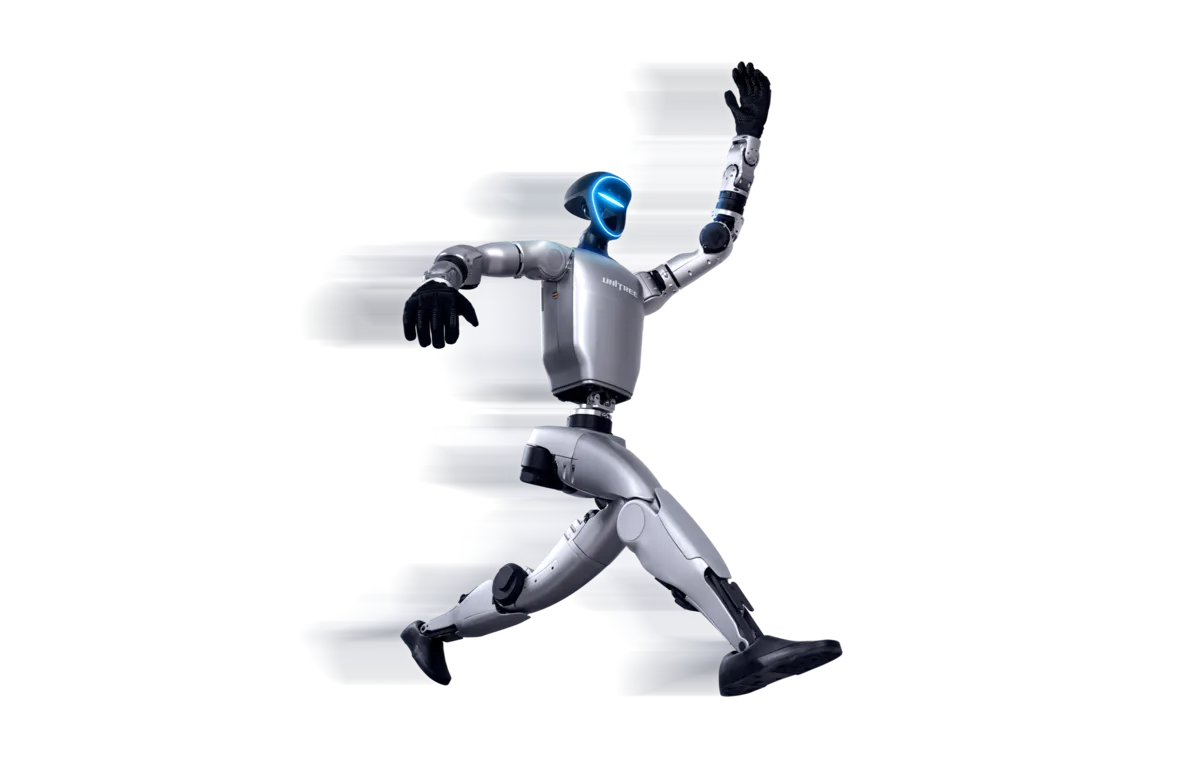
Unitree’s Shanghai IPO is becoming the humanoid robotics sector’s clearest public-market benchmark, but not yet its clearest deployment benchmark. The Chinese robot maker priced the offering at 150.8 yuan per share, implying a valuation of about 61 billion yuan, or roughly $9 billion, and subscriptions opened on August 10. Unitree is seeking approximately 6.1 billion yuan through the sale of 40.45 million new shares. The significance for investors is unusually transparent financial evidence from a humanoid manufacturer. The limitation is equally important: revenue and an IPO do not establish that humanoids are performing useful, repeatable work in customer operations.
The financing itself has stronger verification than many private-market humanoid funding stories. China’s securities regulator approved Unitree’s IPO registration in July, while Reuters reported the subsequent pricing from the Shanghai Stock Exchange filing. The transaction should still be treated as announced rather than closed until completion of the offering is established.
Unitree also gives investors financial data rarely available from a major humanoid specialist. The company reported about 1.7 billion yuan of revenue in 2025, more than four times the prior year, with humanoid robots contributing 867.8 million yuan and becoming its largest product segment. Reuters reported adjusted net profit of about 600 million yuan for 2025. That separates Unitree from companies whose public narratives are dominated by funding, future production targets, or demonstration footage rather than disclosed sales.
The growth profile is already becoming more complicated. First-quarter 2026 revenue increased 68.5% to 422.8 million yuan, while profit excluding one-off items fell 52.6% to 40.3 million yuan as research and marketing spending increased. Unitree also disclosed material overseas exposure, with U.S. sales representing 13.3% of 2025 revenue, creating a direct link between trade restrictions and the company’s growth outlook.
Revenue is not operating proof
The central evidence boundary is customer use. Reuters reports that current demand still comes substantially from universities and government-backed education, research, and demonstration activity. Public evidence reviewed for this Brief does not establish that a material share of Unitree’s humanoid revenue comes from robots performing sustained industrial work with disclosed uptime, throughput, intervention rates, economics, or repeat expansion.
That distinction matters because the IPO can validate capital formation, reported revenue, and a market valuation without validating broad commercial readiness. Under Humanoid Analytics methodology, funding and valuation do not increase an Evidence Score.
The next useful evidence is therefore not a higher share price or another shipment figure. It is customer-confirmed operating data showing where Unitree humanoids are working, what tasks they perform, how much human assistance they require, whether customers are paying for sustained use, and whether deployments repeat or expand. Until that appears, Unitree’s listing should be read as a major financial benchmark for humanoid robotics, not proof that the industry has crossed the industrial deployment threshold.
Sources:
- Reuters, “What is Unitree and why are China’s humanoid robot makers racing to list?”
Source type: Tier 2, strong independent evidence
https://www.reuters.com/world/asia-pacific/what-is-unitree-why-are-chinas-humanoid-robot-makers-racing-list-2026-08-10/ - Reuters, “Chinese humanoid robot maker Unitree prices IPO at $9 billion valuation”
Source type: Tier 2, strong independent evidence
https://www.reuters.com/world/asia-pacific/chinese-robot-maker-unitree-prices-shanghai-ipo-2026-08-06/ - China Securities Regulatory Commission, “关于同意宇树科技股份有限公司首次公开发行股票注册的批复”
Source type: Tier 1, direct or official evidence
https://static.sse.com.cn/stock/disclosure/announcement/c/202607/002178_20260702_TIY7.pdf