
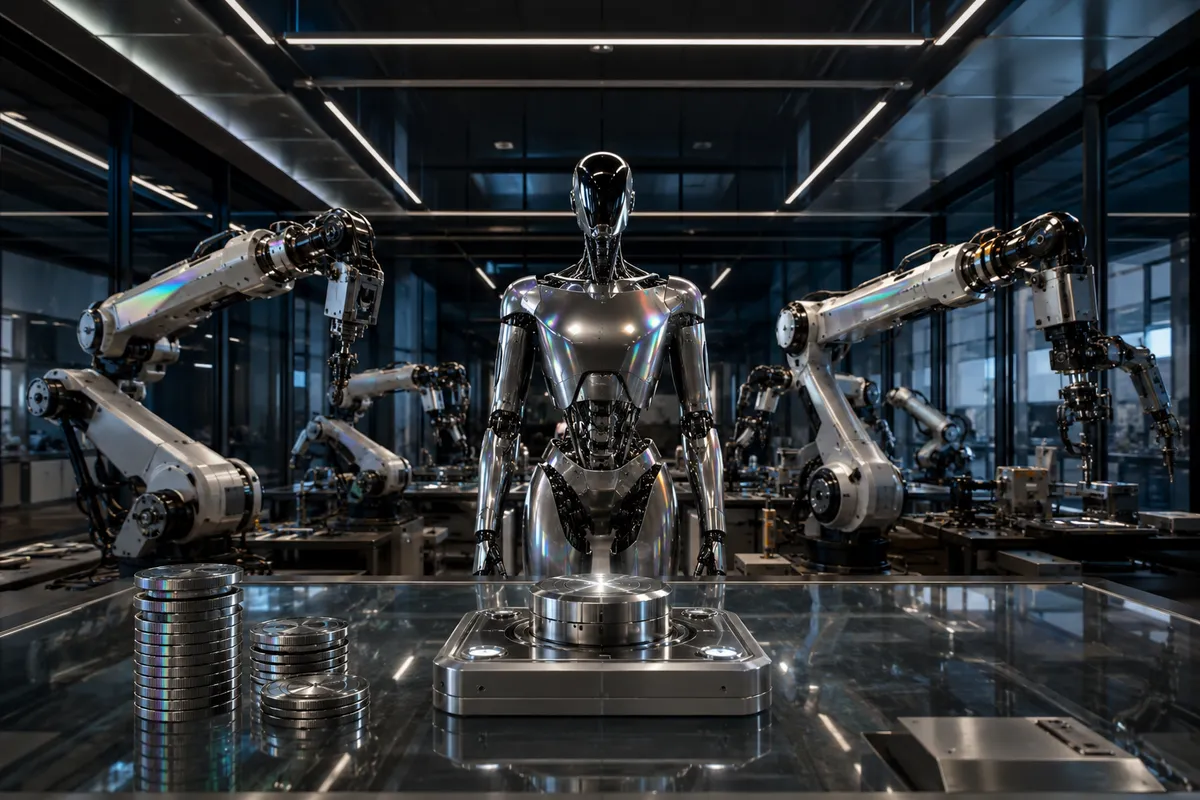
Samsung’s move to become the largest shareholder in Rainbow Robotics shows how the humanoid robot market may be shaped by corporate ownership, not only by startup demos and partnership announcements. By increasing its stake to 35 percent and bringing Rainbow Robotics into its consolidated financial statements, Samsung is using balance-sheet control to secure robotics capability at a time when humanoid development is becoming more capital-intensive, manufacturing-dependent and strategically contested.
The ownership signal is confirmed. Samsung said it first acquired a 14.7 percent stake in Rainbow Robotics in 2023 through an 86.8 billion won investment, then exercised a call option to raise its stake to 35 percent. Reuters reported that the additional stake was worth 267 billion won, about $181 million, and made Samsung the largest shareholder of the South Korean robotics company.
What remains unproven is commercial traction. Samsung’s ownership can improve Rainbow Robotics’ access to manufacturing resources, procurement, engineering depth, global sales channels and long-term capital. It does not show that Rainbow has humanoid robots operating in customer environments, generating repeat orders, or creating measurable return on investment.
That is the useful distinction. Ownership is a stronger strategic signal than a demo video. It is still not deployment evidence.
Why Samsung’s Control Matters
Rainbow Robotics is not a random robotics asset. The company was founded by researchers from KAIST’s Hubo Lab and is known for bipedal humanoid work as well as collaborative robots, mobile manipulators and related robotics platforms. Samsung’s announcement explicitly linked the stake increase to future robot development, including humanoid robots, and said Rainbow Robotics would work closely with Samsung to develop advanced robot technology.
Samsung also created a Future Robotics Office reporting directly to the CEO. Reuters described that office as part of Samsung’s push into robotics after the Rainbow transaction. That governance detail matters because it suggests robotics is not being treated only as a side investment or branding exercise. It is being organized as a strategic corporate initiative.
For humanoid robotics, this kind of structure may matter more than casual partnerships. A large industrial group can provide capital, manufacturing discipline, component procurement, electronics integration, testing infrastructure, and eventual access to internal use cases. Those capabilities are difficult for standalone humanoid startups to build quickly.
The broader implication is that the humanoid market may not be won only by companies with the most visible robots. It may also be shaped by companies that can control the supply chain, absorb long development cycles and integrate robotics into existing industrial or consumer ecosystems.
| Strategic Signal | Why It Matters | What It Does Not Prove |
|---|---|---|
| Samsung increased its Rainbow Robotics stake to 35 percent | Gives Samsung effective strategic control and consolidates Rainbow financially | Does not prove humanoid robot deployment |
| Rainbow becomes a Samsung subsidiary | Could improve access to capital, manufacturing and procurement | Does not disclose robot output, customer adoption or revenue by use case |
| Future Robotics Office reports to Samsung’s CEO | Indicates robotics is being organized as a corporate priority | Does not show which products will commercialize first |
| Humanoid robots are named as a development area | Confirms strategic interest in humanoid capability | Does not prove a humanoid product is ready for customers |
| Rainbow has robotics pedigree from KAIST Hubo work | Adds technical credibility | Technical history is not the same as commercial traction |
Ownership Can Reduce Some Risks
Corporate ownership can reduce several risks that usually slow humanoid robotics companies.
The first is financing risk. Humanoid development requires long hardware cycles, expensive testing, specialized suppliers, field support and repeated redesigns. A parent company such as Samsung can potentially support that work for longer than a venture-backed startup under pressure to show rapid commercial milestones.
The second is manufacturing risk. Humanoid robots are electromechanical systems with motors, reducers, sensors, batteries, compute, hands, wiring, thermal constraints and safety systems. Samsung’s experience in electronics, supply chains and quality control could be useful if Rainbow’s humanoid work moves toward production.
The third is integration risk. Many humanoid companies need to find customer environments where robots can be tested safely and repeatedly. Samsung has factories, logistics operations, service environments and hardware ecosystems that could become internal proving grounds if the company chooses to use them that way.
This does not mean success is likely or automatic. Large corporations can move slowly, struggle to integrate acquisitions, or treat robotics as a long-term option rather than a near-term business. Ownership gives Samsung more control, but it also places Rainbow Robotics inside a much larger corporate structure where priorities can change.
The Missing Evidence Is Still Commercial
The main risk is overinterpreting the acquisition. Samsung buying or consolidating Rainbow Robotics is a market signal. It is not evidence that Rainbow has crossed the hardest commercial thresholds in humanoid robotics.
The evidence still needed is specific: named humanoid customers, robot counts, operating sites, paid pilot terms, task performance, uptime, intervention rates, safety data, maintenance costs, production output and repeat deployment. Without those details, the correct classification is a confirmed strategic ownership claim, not a confirmed deployment claim.
That matters because humanoid robotics is full of signals that sound stronger than they are. A corporate investment can be real and strategically important while still leaving product-market fit unresolved. A large parent company can improve commercialization odds without proving customer demand.
The Humanoid Analytics evidence framework treats this kind of development as meaningful but not equivalent to operational use. The publication’s existing market analysis argues that the sector is splitting between credible deployment signals and companies still relying on funding, demos, shipment claims or future production targets. Samsung’s Rainbow move belongs in a related category: corporate control as a strategic capability signal, not deployment proof.
A Signal For The Next Phase Of Humanoid Competition
Samsung’s Rainbow Robotics transaction points to a broader pattern. As humanoid robotics becomes more expensive and manufacturing-heavy, large industrial and technology groups may prefer ownership over loose partnerships. Hyundai owns Boston Dynamics. Samsung now controls Rainbow Robotics. Automakers and electronics companies are evaluating humanoids not only as products, but as future automation platforms, AI interfaces and manufacturing tools.
That could change the competitive map. Startups may still move faster in early robot development, but industrial owners may have advantages in scaling hardware, reducing component costs, supporting field service and connecting robots to real operations.
For Rainbow Robotics, Samsung’s backing could strengthen the path from technical capability to commercialization. For Samsung, the deal provides a more direct position in robotics at a time when humanoids are becoming part of the broader physical AI conversation.
The next proof will not come from ownership alone. It will come from whether Samsung and Rainbow can turn robotics capability into working systems, first in controlled internal environments and eventually in customer or market-facing deployments. Until then, the deal should be read as a serious strategic move, not as evidence that humanoid robot adoption has arrived.
Sources:
Samsung Newsroom, “Samsung Electronics To Become Largest Shareholder In Rainbow Robotics, Accelerating Future Robot Development”:
https://news.samsung.com/global/samsung-electronics-to-become-largest-shareholder-in-rainbow-robotics-accelerating-future-robot-development
Rainbow Robotics, “Samsung Electronics To Become Largest Shareholder In Rainbow Robotics, Accelerating Future Robot Development”:
https://www.rainbow-robotics.com/en_pr/241231
Reuters, “Samsung Electronics Becomes Largest Shareholder Of South Korea’s Rainbow Robotics”:
https://www.reuters.com/technology/samsung-electronics-becomes-largest-shareholder-south-koreas-rainbow-robotics-2024-12-30/
Yonhap News Agency, “Samsung Electronics To Become Largest Shareholder In S. Korean Robot Maker Rainbow Robotics”:
https://en.yna.co.kr/view/AEN20241231001700320
Humanoid Analytics, “Humanoid Company Tracker”:
https://humanoidanalytics.com/humanoid-company-tracker/
Related: The Humanoid Robot Market Is Splitting Between Evidence And Hype.