
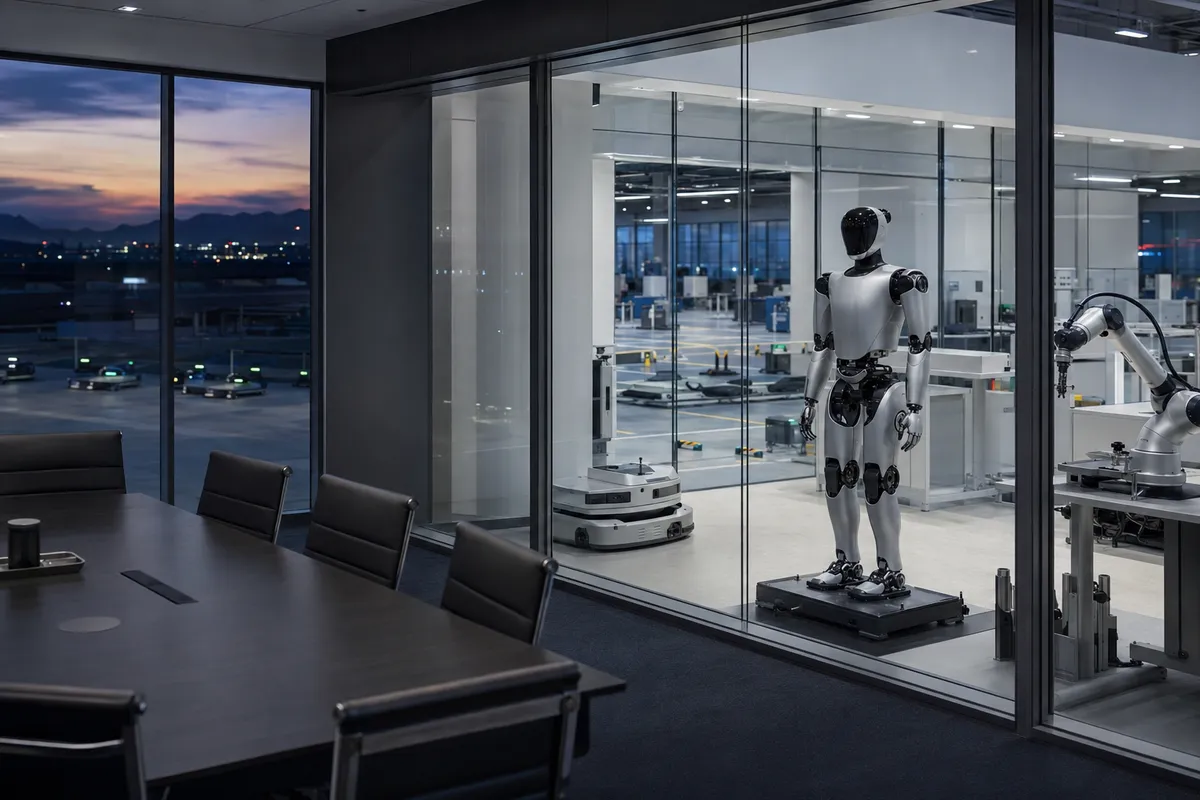
Samsung Electronics has created a robotics division reporting directly to its chief executive, moving robotics from a distributed research effort toward a centrally managed business priority. The RX, or Robotics eXperience, division will oversee strategy, core technology development and commercialization. This strengthens Samsung’s position as a potential humanoid robotics competitor and consolidator, but it does not yet provide evidence of a market-ready robot, operating customer deployment or robotics revenue.
The division will be supported by planned research hubs in the United States, China and Japan. Samsung has appointed Executive Vice President Lee Dongkun to lead its Robotics Strategy Team. Lee previously directed robotics strategy at Hyundai Motor Group, including work involving Boston Dynamics. Samsung has said it intends to begin with humanoid applications at manufacturing sites before considering home and retail uses.
The organizational change builds on Samsung’s earlier move to become the largest shareholder in Rainbow Robotics. In December 2024, a regulatory filing showed that Samsung acquired a 267 billion won stake and established a CEO-level Future Robotics Office. The new RX structure therefore appears to formalize and broaden an existing commitment rather than mark Samsung’s first entry into robotics.
The evidence supports a strategic commitment, not commercial readiness. Samsung has not publicly identified a humanoid model covered by the new division, a manufacturing site where one is operating, a customer, a paid pilot, production volume, delivery schedule or performance metric. Its stated intention to deploy humanoids initially in manufacturing remains forward-looking.
That distinction matters for competitors and suppliers. Samsung has semiconductor, display, battery, consumer-electronics, manufacturing and global distribution capabilities that could support a vertically integrated robotics business. Its ownership position in Rainbow Robotics also provides access to established robotics engineering. The RX division may improve coordination across those assets and make acquisitions, supplier agreements and talent recruitment easier to execute.
The immediate competitive effect is nevertheless organizational rather than operational. Existing humanoid developers do not yet face verified Samsung deployments, measurable production or demonstrated customer economics. Suppliers should also avoid interpreting the announcement as evidence of near-term procurement demand until Samsung identifies platforms, components, facilities and production requirements.
The next material evidence would be a named robot program with a defined task and deployment site. Stronger proof would include customer or factory confirmation, production output, units delivered, operating hours, intervention rates, reliability data or a paid external deployment. Until then, Samsung’s RX division should be recorded as a significant strategic market signal, not evidence that Samsung has achieved humanoid commercialization.
Sources:
Reuters, Samsung Electronics creates robotics division; ex-Hyundai executive to head strategy: https://www.reuters.com/world/asia-pacific/samsung-electronics-creates-robotics-division-key-part-growth-strategy-2026-07-21/
Reuters, Samsung Electronics becomes largest shareholder of South Korea’s Rainbow Robotics: https://www.reuters.com/technology/samsung-electronics-becomes-largest-shareholder-south-koreas-rainbow-robotics-2024-12-30/