
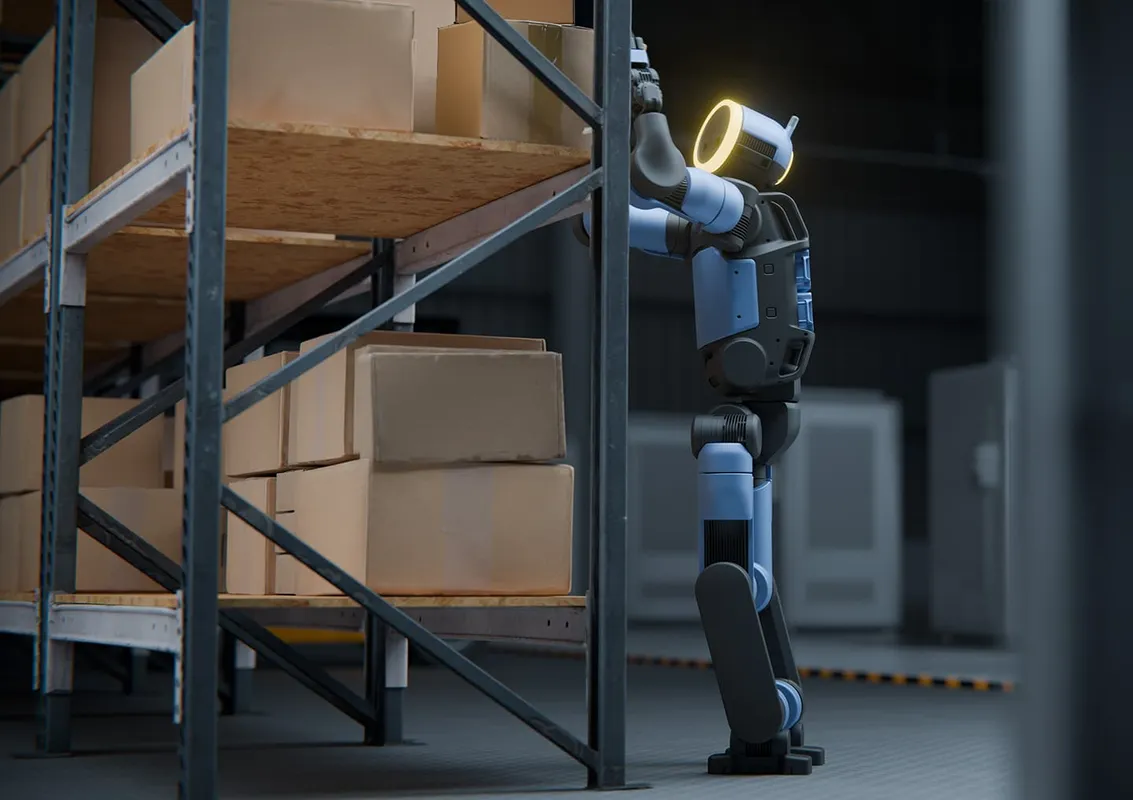
Boston Dynamics’ electric Atlas is entering the phase where technical credibility must turn into commercial proof. The company has unveiled a product version of Atlas, scheduled 2026 shipments to Hyundai and Google DeepMind, and tied the robot’s future to Hyundai manufacturing and Google’s robot AI models. The open question is whether Atlas can move from one of robotics’ most impressive engineering programs into useful, repeatable factory workflows.
The confirmed signal is meaningful. Boston Dynamics says it will begin manufacturing the product version of Atlas at its Boston headquarters, with 2026 fleets scheduled for Hyundai’s Robotics Metaplant Application Center and Google DeepMind. Reuters separately reported that Hyundai plans to deploy Atlas at its U.S. manufacturing plant in Georgia starting in 2028, initially for parts sequencing, with more complex component assembly targeted by 2030.
What remains unproven is just as important. There is not yet public evidence that Atlas is operating at commercial scale, producing measurable customer ROI, or performing sustained factory tasks with disclosed uptime, intervention rates, safety performance, or cost per task. Atlas has moved from research icon to product candidate, but not yet to validated industrial labor platform.
Atlas Is Becoming A Product, Not Just A Demonstration
Boston Dynamics’ shift matters because Atlas has long occupied a unique position in robotics. Its earlier hydraulic version became famous for athletic demonstrations, including jumping, parkour and dynamic recovery. Those videos showed control, balance and mechanical sophistication, but they did not prove commercial readiness.
The electric Atlas is different in intent. Boston Dynamics says the new version is designed for industrial tasks including material handling and order fulfillment, with autonomous operation, teleoperation and tablet steering modes. The company also says Atlas has 56 degrees of freedom, a reach of 2.3 meters, lift capacity of up to 50 kilograms and operation across a temperature range of minus 20 degrees Celsius to 40 degrees Celsius.
Those specifications are commercially relevant because factory and warehouse use requires strength, reach, environmental tolerance and integration with industrial systems. Boston Dynamics says Atlas can connect to manufacturing execution systems and warehouse management systems through its Orbit software. If that works reliably, Atlas could fit into existing plant infrastructure rather than operating as an isolated robot.
But product claims need field validation. A robot that can lift 50 kilograms in a controlled environment is not automatically useful on a production floor. The commercial test is whether it can repeatedly handle real parts, recover from errors, operate safely around people, and justify its cost against conventional automation.
| Area | Confirmed Signal | Evidence Still Needed |
|---|---|---|
| Product status | Boston Dynamics unveiled a product version of electric Atlas | Delivered units, installed fleet size and production consistency |
| Hyundai pathway | Reuters reported Hyundai plans U.S. factory deployment from 2028 | Customer-site performance, workflow results and expansion decisions |
| 2026 deployments | Boston Dynamics says fleets are scheduled for Hyundai RMAC and Google DeepMind | Operating data, autonomy levels and task completion metrics |
| AI partnership | Hyundai and Boston Dynamics announced a Google DeepMind partnership | Measurable improvements in task learning, generalization and reliability |
| Manufacturing ambition | Hyundai aims for a factory capable of 30,000 robot units annually by 2028 | Actual output, yields, cost, component supply and service infrastructure |
| Commercial readiness | Atlas is designed for industrial material handling and future assembly work | ROI, safety record, uptime, intervention rates and repeat customer adoption |
Hyundai Gives Atlas A Real Industrial Pathway
Hyundai ownership gives Boston Dynamics an advantage many humanoid developers lack: a large industrial parent with factories, supply chains and internal use cases. That does not guarantee commercial success, but it gives Atlas a plausible route from pilot testing to controlled factory deployment.
Reuters reported that Hyundai plans to deploy Atlas at its Georgia manufacturing plant from 2028. The robots are expected to begin with parts sequencing, then gradually expand into more complex tasks as safety and quality benefits are validated. Hyundai also said Atlas could eventually support tasks involving heavy loads, repetitive motions and complex operations across production sites.
Parts sequencing is a sensible early target. It is less dramatic than full vehicle assembly, but that is the point. Early humanoid deployments are more likely to succeed in structured workflows where the task is repetitive, the environment is mapped, and success can be measured through cycle time, error rate and human intervention.
The risk is that a humanoid may still be more complex than necessary. Automotive plants already use conveyors, robotic arms, autonomous mobile robots, lift assists and specialized fixtures. Atlas must show that its human-like mobility and manipulation create value in spaces where fixed automation or simpler mobile robots are less practical.
Hyundai’s production ambition raises the stakes further. Reuters reported that Hyundai aims to build a factory capable of manufacturing 30,000 robot units annually by 2028. That is a serious manufacturing target, but it should be treated as capacity ambition until output, cost, reliability and customer demand are demonstrated.
Google DeepMind Makes The AI Question More Serious
The Google DeepMind collaboration gives Atlas a credible AI development partner. Hyundai said the partnership is intended to combine Boston Dynamics’ robotics expertise with Google DeepMind’s robot AI foundation models, including Gemini Robotics, to help robots perceive, reason, use tools and interact with humans.
That partnership matters because hardware alone will not determine humanoid adoption. A factory humanoid needs to learn new tasks quickly, handle variation, avoid unsafe behavior and recover from routine failures. A highly capable body without adaptable intelligence risks becoming another expensive machine that needs heavy engineering support for each workflow.
The evidence threshold should still remain practical. The useful question is not whether Atlas can be paired with advanced AI models, but whether that pairing reduces deployment time, teleoperation dependence, intervention rates and task-specific programming in real customer environments.
The Association for Advancing Automation reported that Google DeepMind’s work with Atlas is set to involve deploying Gemini Robotics foundation models on the new humanoid, while noting that return on investment remains a major unanswered question for field deployment. That is the right caution.
Technical Credibility Is Not The Same As Deployment Evidence
Boston Dynamics has more technical credibility than almost any humanoid robotics company. Spot and Stretch also give it commercial experience outside the lab, especially in inspection and logistics. Atlas benefits from that institutional knowledge, including safety thinking, support systems and software integration.
Still, Atlas should not yet be treated as a proven commercial humanoid. Boston Dynamics says 2026 deployments are scheduled, but the public evidence available today is closer to internal testing and early committed deployment than operational customer validation. Hyundai’s broader factory rollout is planned for 2028, not already proven.
That timeline makes 2026 important. If Atlas ships to Hyundai RMAC and Google DeepMind, the next evidence to watch will be task selection, number of robots, operating hours, autonomy level, safety constraints, and whether the systems are learning workflows that transfer beyond the initial site.
The strongest future signal would be Hyundai confirming sustained Atlas operation in a production workflow, followed by expansion to additional lines or plants. Independent data on uptime, human intervention, task throughput, maintenance requirements and cost per operation would move Atlas from product promise toward deployment proof.
Atlas is no longer only a dramatic research platform. Boston Dynamics now has a product version, an industrial parent, an AI partner and a plausible manufacturing use case. That combination makes Atlas one of the most important humanoid programs to watch.
But the commercial proof phase is unforgiving. In this phase, backflips no longer matter. Useful work does.
Sources:
Boston Dynamics, “Boston Dynamics Unveils New Atlas Robot to Revolutionize Industry”:
https://bostondynamics.com/blog/boston-dynamics-unveils-new-atlas-robot-to-revolutionize-industry/
Reuters, “Hyundai Motor Group Plans to Deploy Humanoid Robots at US Factory From 2028”:
https://www.reuters.com/business/autos-transportation/hyundai-motor-group-plans-deploy-humanoid-robots-us-factory-2028-2026-01-05/
Hyundai Motor Group, “Hyundai Motor Group Announces AI Robotics Strategy to Lead Human-Centered Robotics Era at CES 2026”:
https://www.hyundai.com/worldwide/en/newsroom/detail/hyundai-motor-group-announces-ai-robotics-strategy-to-lead-human-centered-robotics-era-at-ces-2026-0000001100
Association for Advancing Automation, “Boston Dynamics to Begin Production on Redesigned Atlas Humanoid in 2026”:
https://www.automate.org/robotics/industry-insights/boston-dynamics-to-begin-production-on-redesigned-atlas-humanoid-in-2026
Humanoid Analytics Company Tracker:
https://humanoidanalytics.com/humanoid-company-tracker/
Related: The Humanoid Robot Market Is Splitting Between Evidence And Hype.