
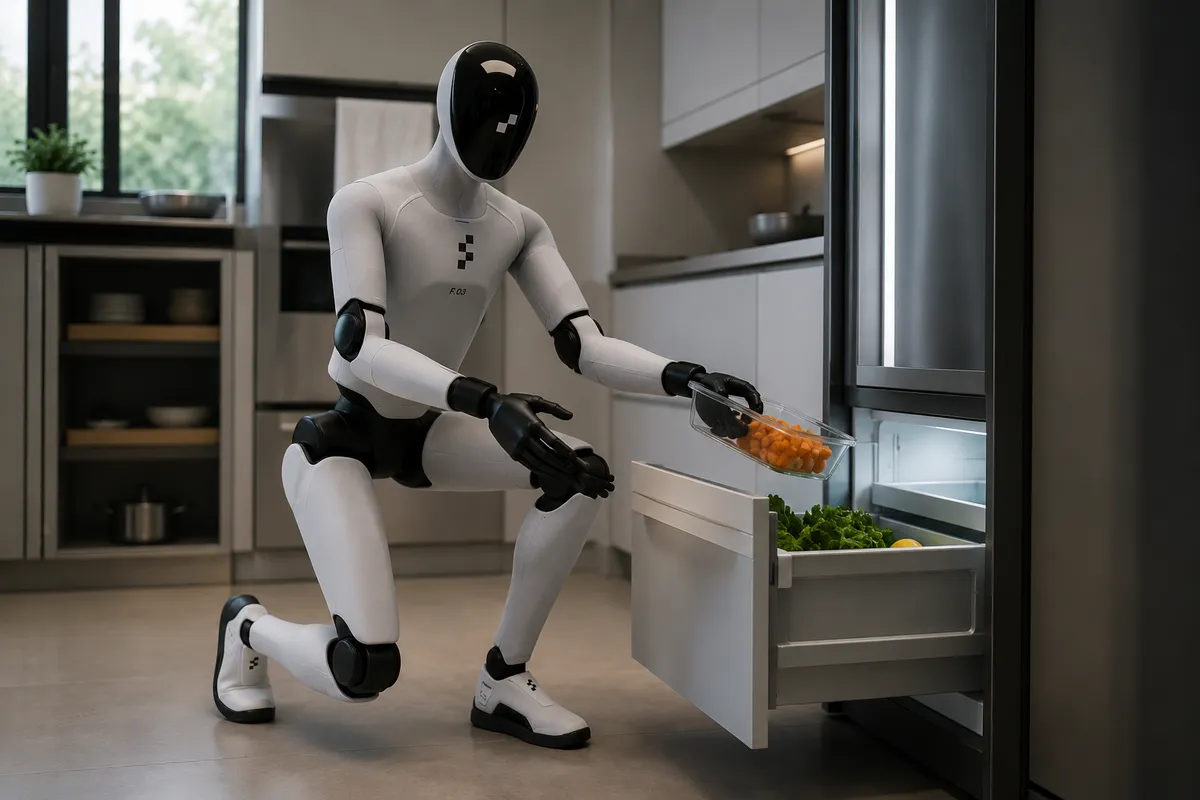
Figure AI’s most interesting signal from Brett Adcock’s recent podcast appearance was not the package-sorting livestream, the Figure 4 teaser, or the company’s confidence about future home robots. It was a brief story about a fridge task, in which Adcock said a Figure robot’s success rate improved sharply after the model was trained on additional data from unrelated tasks, a claim that speaks directly to the central commercial question in humanoid robotics: whether Physical AI can generalize across the messy real world.
The claim should be treated carefully. Adcock described an internal Figure evaluation, not an independently verified benchmark, customer deployment, or peer-reviewed result. If the pattern holds at scale, it would be more important than a single polished demo, because it would suggest that humanoid robots may benefit from cross-task learning in the physical world in a way that resembles the scaling logic behind large language models.
In the podcast, Adcock described earlier Figure 2 work involving a robot placing items such as condiments or cheese into a refrigerator drawer. According to him, a model trained only on fridge data achieved roughly 55% to 60% success. Figure then trained the same model with a larger and more diverse dataset that included non-fridge tasks, such as opening cabinets and drawers and tabletop manipulation. Adcock said the next limited evaluation reached around 90% success on the fridge task, despite not increasing the fridge-specific data.
That is the “miracle” in the story, not because the number itself is verified, but because of the underlying implication. If unrelated manipulation data can improve performance on a specific task, then humanoid developers may not need to train every behavior from scratch. A robot that learns better handling of bags, drawers, surfaces, and object placement in one context may become better at similar physical reasoning elsewhere.
Why the Fridge Claim Matters
The fridge story sits at the heart of the Physical AI debate. Most robots today still struggle because real environments contain long-tail variation: lighting changes, object shapes, clutter, deformable items, occlusions, awkward grasps, and task sequencing. Traditional robotics can solve narrow tasks with engineered fixtures and controlled conditions, but general-purpose humanoids need learned behavior that transfers between homes, warehouses, factories, and offices.
Adcock framed humanoids as having an “unfair advantage” because their body plan roughly matches the human-built world. His argument is that one humanoid hardware platform can collect diverse experience across many use cases, then improve a shared model that benefits the whole fleet. In his words, a humanoid that improves at logistics could make every robot in the fleet better at logistics after the trained weights are updated across the network.
Figure’s public positioning supports that direction. The company describes Helix as its proprietary vision-language-action AI, and says Figure 03 was designed around Helix, including upgraded cameras, palm cameras, tactile sensing, high-speed data offload, and hardware intended to support end-to-end pixels-to-action learning. Figure’s website also positions Figure 03 as a home-oriented humanoid that can handle household tasks and adapt to everyday environments, though those remain company claims rather than independently validated commercial capabilities.
The most commercially relevant part is not whether a robot can put cheese in a fridge once. It is whether the learning curve improves across task families. If adding cabinet, drawer, tabletop, bag, and object-handling data improves refrigerator performance, then Figure may be seeing early evidence that physical skills can compose. That would be a meaningful step toward robots that learn from broader experience rather than narrow scripts.
The Evidence Is Still Thin
There are important limits. Figure’s CEO described the fridge story during a podcast, and the claim appears to be based on internal testing. There is no public dataset, no independent benchmark, no disclosed task protocol, no trial count, no object distribution, and no confidence interval. The jump from roughly 60% to 90% may be real, but outsiders cannot yet know whether it came from true generalization, better data coverage, evaluation variance, task simplification, model tuning, or other changes in the training pipeline.
That distinction matters because humanoid robotics is full of demonstrations that look strategically important but do not survive contact with operational conditions. A fridge task in a lab or controlled home-like setting is not the same as reliable daily work in a random kitchen. Even a high success rate on one evaluation does not answer questions about safety, recovery from failure, maintenance, cost, uptime, human interaction, or whether the robot can perform the task repeatedly for paying users.
Still, the story is a useful signal because it points to Figure’s internal theory of progress. Adcock repeatedly emphasized that data is the company’s biggest constraint, ahead of compute and manufacturing. He also said Figure is spending its effort on pre-training because that is where it expects real generalization to emerge. That is a different bottleneck from the older robotics problem of writing more task code. It suggests Figure sees the race as one of collecting, filtering, scaling, and training on the right physical-world data.
A Breakthrough, or a Directional Signal?
Calling this a breakthrough would be premature. What is confirmed is that Adcock publicly described the fridge story during a YouTube podcast appearance, and the supplied transcript captures the claim in detail. What remains unconfirmed is the technical result itself, including whether the improvement reflects true generalization and whether it applies beyond a limited internal test.
The more defensible interpretation is that Figure is describing an early transfer-learning effect in humanoid manipulation. If validated, that could become one of the foundations of commercial Physical AI. A general-purpose robot will not be commercially viable because it can perform one memorized task. It will become viable only if experience from many tasks improves performance across the whole system.
That is why the fridge story matters more than its humble setting suggests. Refrigerators are not the market. The market is reliable generalization across physical work. Figure has not proven that yet, but this company-disclosed internal example explains what the company is trying to prove.
For investors, customers, and competitors, the next evidence to watch is not another isolated demo. It is whether Figure can publish or demonstrate repeatable cross-task improvement across many environments, with transparent baselines, failure rates, and task definitions. If the fridge effect scales beyond a limited internal evaluation, it could be one of the clearest signs that humanoid robotics is moving from scripted automation toward learned physical intelligence.