
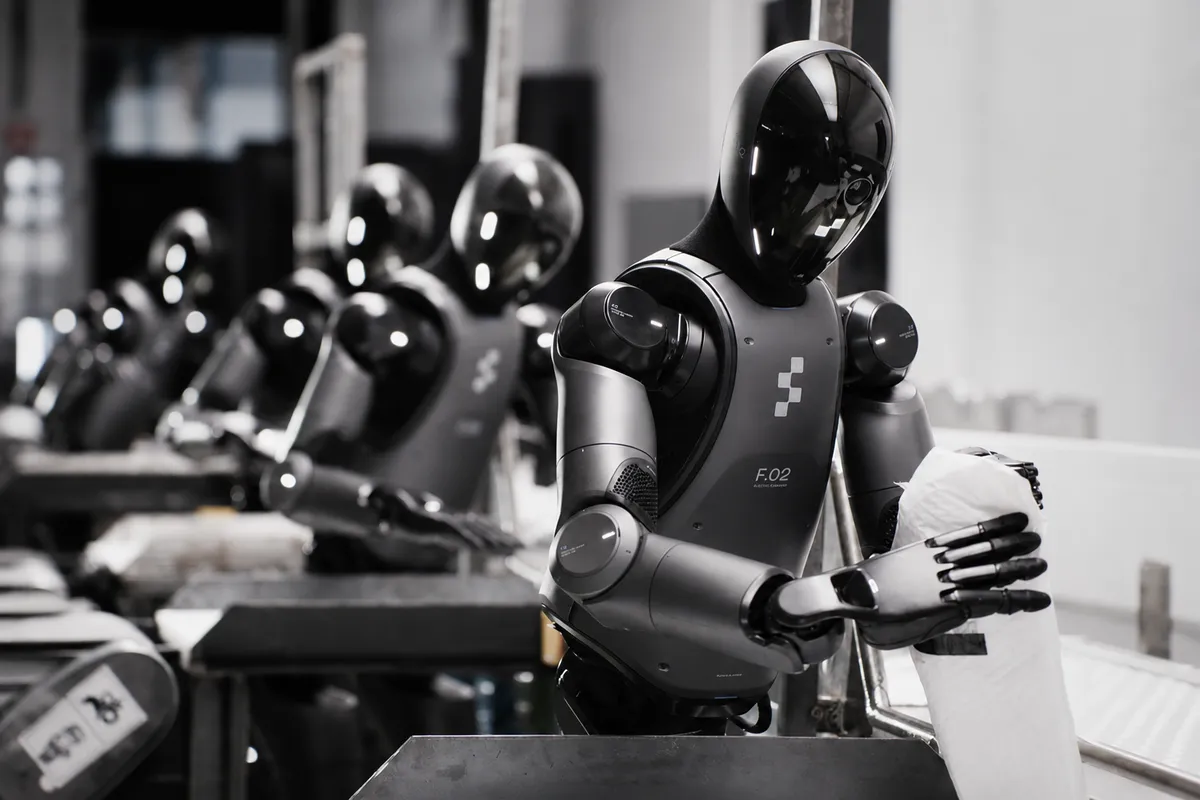
Figure AI’s $39 billion post-money valuation has become one of the clearest tests of how far capital markets are willing to price future humanoid robot adoption before commercial scale is proven. The company has raised more than $1 billion in Series C funding, built a strategy around its Helix AI system and BotQ manufacturing facility, and now has more public deployment evidence than many rivals. The harder question is whether those signals can justify a valuation that already assumes a large market will arrive.
The funding is confirmed. Reuters reported in September 2025 that Figure raised more than $1 billion in a Series C round at a $39 billion post-money valuation, led by Parkway Venture Capital, with participation from Nvidia, Intel Capital, LG Technology Ventures, Salesforce, T-Mobile Ventures and Qualcomm Ventures. Figure’s own announcement said the capital would support Helix, BotQ manufacturing, data collection and commercial deployment.
What remains unproven is not whether Figure can attract elite investors or produce compelling technology demonstrations. It is whether the company can manufacture humanoids reliably, deploy them in repeatable customer workflows, reduce human intervention, and show that robots can create measurable value beyond a handful of early sites.
That distinction matters because Figure is no longer being valued like a speculative robotics prototype company. At $39 billion, it is being valued as a future platform company in embodied AI, manufacturing and labor automation. The evidence bar is therefore much higher.
The Valuation Is Pricing A Platform, Not A Product
Figure’s valuation reflects a broad thesis: humanoid robots could become a general-purpose automation platform, and Figure could be one of the companies that scales first. That thesis depends on three linked pieces.
The first is hardware. Figure has introduced multiple robot generations, most recently Figure 03, which it says is designed for Helix, home use and large-scale production. The company describes Figure 03 as a ground-up redesign intended to support human-like tasks, data collection and learning directly from people.
The second is AI. Figure describes Helix as its proprietary vision-language-action system, intended to connect perception, language and robot control. In the company’s framing, Helix is the intelligence layer that could allow robots to generalize across changing homes, logistics sites and factories. Humanoid Analytics has previously treated Figure’s transfer-learning claims as strategically important but still thinly evidenced, because they come from internal examples rather than independent benchmarks.
The third is manufacturing. Figure says BotQ’s first-generation manufacturing line will be capable of producing up to 12,000 humanoids per year. That is a meaningful production target, but it is still a company-stated capacity claim, not proof of sustained output, quality yield, field reliability or customer demand at that volume.
Together, these three pieces explain why investors are paying for more than a robot. They are paying for the possibility that Figure can become an integrated humanoid robotics company with AI, hardware, manufacturing and data advantages.
But integration also raises execution risk. If Helix generalizes slowly, if BotQ cannot produce reliable units at cost, or if customers do not expand beyond pilots, the valuation becomes difficult to support.
| Area | Confirmed Signal | Evidence Still Needed |
|---|---|---|
| Funding | More than $1 billion Series C at $39 billion post-money valuation | Capital efficiency and future financing needs |
| Investors | Parkway Venture Capital led the round, with Nvidia, Intel Capital, Salesforce, Qualcomm and others participating | Long-term strategic value beyond financial signaling |
| Helix | Figure describes Helix as its AI system for robot control and generalization | Independent benchmarks, failure rates and customer-site performance |
| BotQ | Figure says the first line can produce up to 12,000 humanoids per year | Actual output, yield, cost, serviceability and delivered units |
| BMW | BMW has confirmed Figure 02 use at Spartanburg and reported measurable production support | Repeat orders, multi-site expansion and disclosed economics |
| Home robotics | Figure 03 is positioned for home use | Real customer availability, safety data, privacy model and support cost |
BMW Gives Figure Its Strongest Deployment Evidence
Figure’s BMW relationship is now the most important counterweight to the claim that the company is valued only on hype.
BMW said in February 2026 that the first deployment of humanoid robots at a BMW Group plant took place at Spartanburg in 2025 in collaboration with Figure AI. BMW said Figure 02 supported production of more than 30,000 BMW X3 vehicles within ten months, working ten-hour shifts from Monday to Friday.
Figure also published its own BMW deployment results in November 2025, saying Figure 02 completed an 11-month deployment at BMW Group Plant Spartanburg, ran 10-hour shifts Monday through Friday, loaded more than 90,000 parts, and operated on an active assembly line.
That is stronger evidence than a public demo or internal lab test. It indicates that Figure’s robot has performed repeated work in a real automotive production environment, with a named customer and a defined use case.
Still, it should not be overstated. Public materials do not fully disclose fleet size, robot utilization, intervention rates, maintenance burden, safety incidents, cost per task, payback period, or whether BMW has placed repeat orders for a broad rollout. The Spartanburg case supports an operational deployment evidence level. It does not yet prove repeat deployment or commercial-scale deployment.
The distinction is central to Figure’s valuation. A robot that can contribute to an automotive line is a real signal. A company valued at $39 billion needs to show that this can be repeated across many lines, customers and use cases.
BotQ Turns Manufacturing Into The Next Test
BotQ is strategically important because humanoid robotics is not only a software problem. It is a manufacturing, supply chain, quality control and field service problem.
Figure’s announced target of up to 12,000 humanoids per year from its first-generation BotQ line is ambitious by humanoid industry standards. If achieved with acceptable quality and cost, it could give Figure a meaningful scaling advantage.
But production capacity claims need careful treatment. A facility capable of producing a certain number of units is different from producing those units, delivering them to customers, and supporting them in the field. Robotics companies often face bottlenecks in actuators, batteries, sensors, compute, thermal management, calibration, final assembly, software integration and maintenance infrastructure.
BotQ is therefore best understood as a credible manufacturing commitment, not yet proof of commercial scale. The next evidence to watch is actual unit output, defect rates, delivery counts, installed fleet size and the share of robots operating in customer environments rather than internal testing or demonstration.
Figure’s valuation leaves little room for manufacturing theater. If BotQ becomes a real production system tied to customer deployments, it strengthens the investment case. If it remains mostly a capacity claim, it does not close the gap between expectations and adoption.
Helix Is The Technical Bet Behind The Valuation
Helix is the other major pillar of the Figure story. The company’s argument is that a humanoid form factor, paired with a generalist AI model, can collect and reuse physical-world data across many environments. That would make Figure less like a traditional industrial robot maker and more like an embodied AI platform.
This is why the company’s AI claims matter. If Helix can reduce task-specific engineering, learn from human video or robot fleet data, and transfer skills across workflows, Figure’s market opportunity expands. It could support deployment in factories, logistics sites and eventually homes.
But this remains the least externally verifiable part of the story. Figure’s public videos and company claims show progress, but they do not provide enough detail on baselines, task definitions, intervention rates, safety constraints, recovery from failure or performance under customer-site variation. Humanoid Analytics’ earlier analysis of Figure’s fridge-task claim treated it as a useful directional signal, not a verified breakthrough, because the evidence was based on an internal example rather than independent validation.
That is not a dismissal. In humanoid robotics, internal testing often comes before customer evidence. But investors should distinguish between a plausible AI strategy and proven operational autonomy.
High Expectations Create A Narrower Path
Figure has several advantages that many humanoid companies lack: major funding, strategic investors, a visible AI roadmap, a named automotive deployment and an explicit manufacturing strategy. Those are real strengths.
The risk is that the valuation compresses the timeline for proof. At $39 billion, Figure must show more than technical momentum. It must show that customers will adopt, expand and pay for humanoid robots in ways that justify industrial-scale production.
The strongest next evidence would include BMW expanding Figure robots into additional lines or plants, another named customer confirming sustained operational use, BotQ producing and delivering units at meaningful volume, and Figure disclosing operational metrics such as uptime, intervention rates, safety performance and cost per task.
Figure’s Series C is a major funding signal for the humanoid robotics market. It shows that investors are willing to underwrite the idea that humanoid robots could become a general-purpose labor platform. But the valuation also sharpens the question facing the entire sector: whether embodied AI and humanoid hardware can move fast enough from impressive demonstrations and early deployments to repeatable, economical work.
Figure has moved beyond pure concept. It has not yet proven the scale implied by $39 billion.
Sources:
Reuters, “Robotics startup Figure valued at $39 billion in latest funding round”:
https://www.reuters.com/business/robotics-startup-figure-valued-39-billion-latest-funding-round-2025-09-16/
Figure AI, “Figure Exceeds $1B in Series C Funding at $39B Post-Money Valuation”:
https://www.figure.ai/news/series-c
Figure AI, “BotQ: A High-Volume Manufacturing Facility for Humanoid Robots”:
https://www.figure.ai/news/botq
Figure AI, “Introducing Figure 03”:
https://www.figure.ai/news/introducing-figure-03
BMW Group, “BMW Group to Deploy Humanoid Robots in Production in Germany for the First Time”:
https://www.press.bmwgroup.com/global/article/detail/T0455864EN/bmw-group-to-deploy-humanoid-robots-in-production-in-germany-for-the-first-time?language=en
Figure AI, “F.02 Contributed to the Production of 30,000 Cars at BMW”:
https://www.figure.ai/news/production-at-bmw
Humanoid Analytics Company Tracker:
https://humanoidanalytics.com/humanoid-company-tracker/
Related Humanoid Analytics article: Figure’s Fridge Story Shows Why Transfer Learning May Matter.