
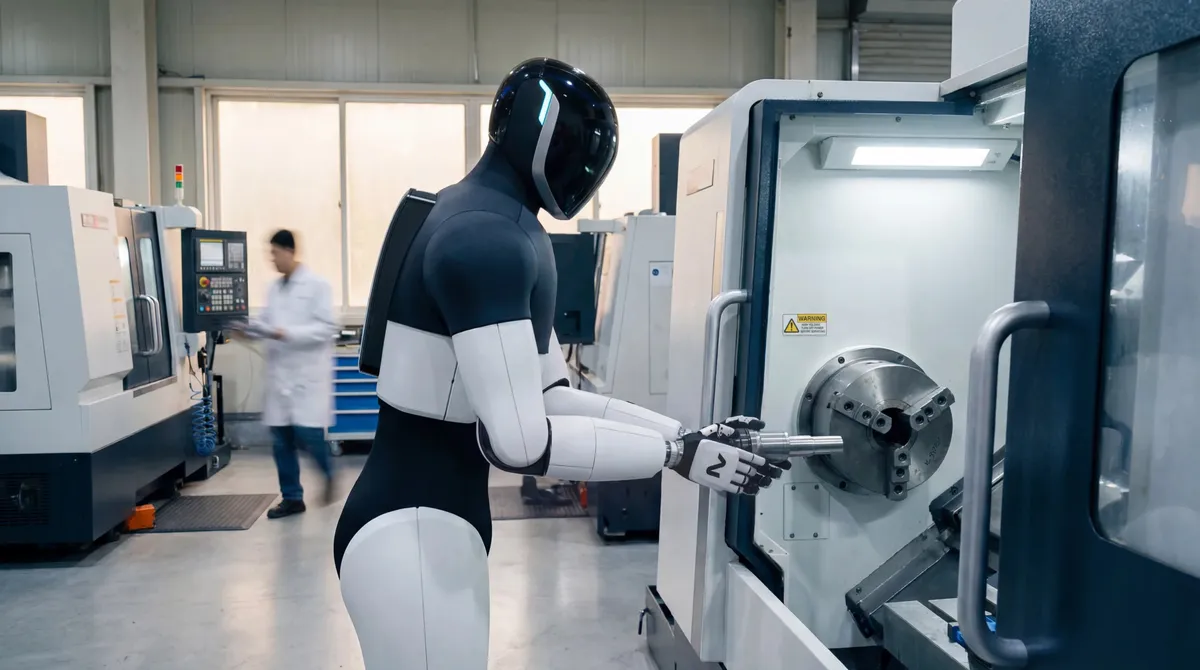
Neura Robotics’ new Series C is the strongest humanoid robotics signal of the past few days, not because it proves commercial readiness, but because it shows how quickly the sector’s bottleneck is shifting from lab capability to capital intensity, manufacturing scale, and ecosystem control. The German company announced up to $1.4 billion in funding on June 10, with backers including Tether, Qualcomm Technologies, Amazon, NVIDIA, Bosch, Schaeffler, the European Investment Bank, Lingotto Horizon and InterAlpen Partners.
The company says the money will support serial production, a “Neuraverse” shared intelligence platform, and global rollout of “NEURA Gyms,” real-world training environments for cognitive robots. It also claims plans to scale toward multi-million robot production by 2030. Those are ambitious targets, but they remain company projections rather than independently verified production evidence.
The more commercially relevant detail is the mix of investors. Bosch and Schaeffler bring industrial manufacturing and component credibility, while NVIDIA, Qualcomm and Amazon point to compute, AI infrastructure and cloud or logistics adjacency. That does not mean Neura has solved reliability, service economics, safety certification or customer deployment at scale. It does suggest investors are treating humanoids less as a single robot product and more as a physical AI infrastructure market.
Reputable reporting adds useful context. The Financial Times reported that Neura is valued at about $7 billion and plans to increase humanoid production from 6,000 units this year to tens of thousands next year. WSJ reported that Neura says it has an order backlog exceeding $1 billion. Both figures matter, but orders and backlog are not the same as robots operating profitably in customer environments.
A second notable signal came from Xpeng. Reuters reported on June 10 that CEO He Xiaopeng will personally lead the company’s robotics division as the EV maker pushes toward mass production of its IRON humanoid robots by the end of 2026. The planned initial use in Xpeng retail stores gives the company a controlled deployment path, but it is still closer to internal validation than broad external market adoption.
The implication is clear. Humanoid robotics is attracting enough capital and corporate sponsorship to test manufacturing at much larger scale. The open question is whether funded production can convert into repeat paid deployments, uptime, maintainability, and unit economics customers will accept.
Sources:
NEURA Robotics, June 10, 2026: https://neura-robotics.com/record-series-c/
Financial Times, June 2026: https://www.ft.com/content/237f10c2-b2b2-490b-bec1-8864e0a22772
Wall Street Journal, June 2026: https://www.wsj.com/tech/ai/nvidia-amazon-back-neura-robotics-1-4-billion-fundraise-ff630662
Reuters, June 10, 2026: https://www.reuters.com/world/china/xpeng-boss-head-robot-unit-with-humanoid-mass-production-imminent-2026-06-10/