
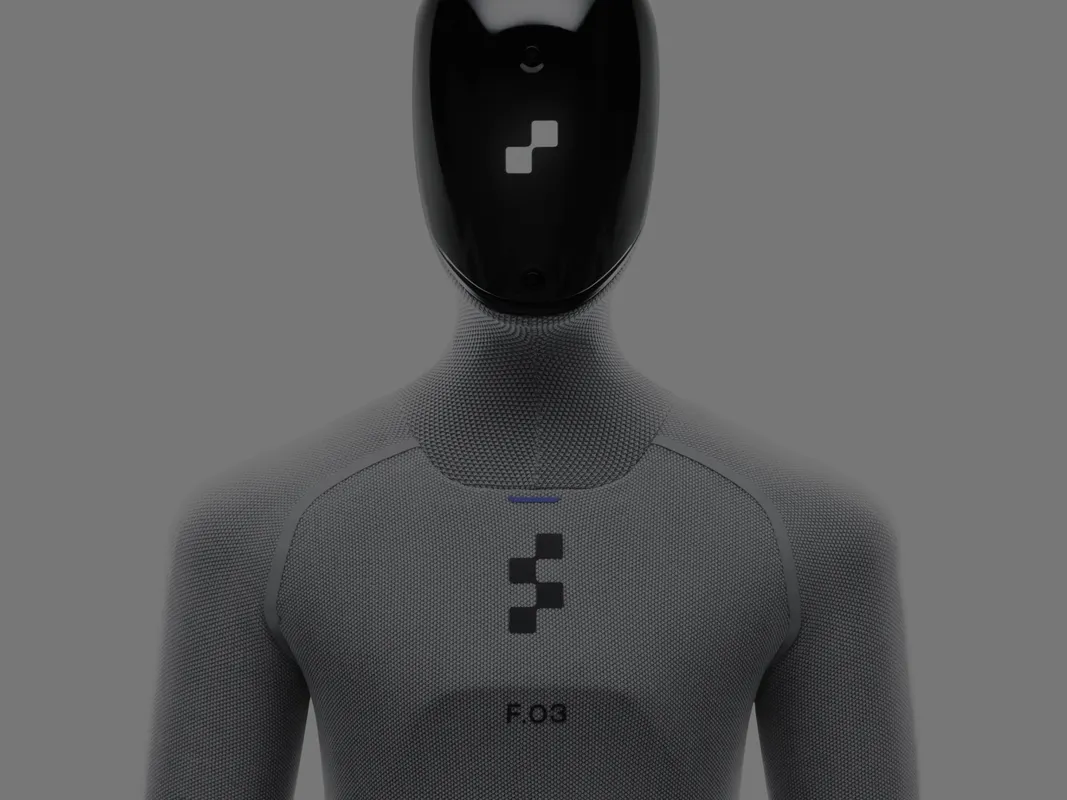
Figure AI currently has the strongest combined public case for producing a ChatGPT-like inflection in humanoid robotics. That conclusion does not mean Figure has already achieved mass adoption, proved attractive unit economics, or established broad technical autonomy. It means Figure has assembled an unusual combination of measurable customer operation, continuing customer activity, general-purpose AI ambition, substantial manufacturing plans, and public visibility.
Agility Robotics presents the strongest counterargument. Its Digit robot has a customer-confirmed, multi-year commercial agreement with GXO and a disclosed work metric from an operating warehouse. In some respects, Agility has stronger commercial evidence than Figure. Its limitation is that the publicly documented work remains narrow, and the available record does not yet establish rapid replication across large fleets, sites, customers, and workflows.
No company has yet produced a true ChatGPT moment in humanoid robotics. Figure appears closest to the technical and market narrative. Agility appears closest to proving that a humanoid can become a repeatable commercial service. The eventual leader will need to combine both.
What a ChatGPT Moment Would Actually Require
“ChatGPT moment” is not a Humanoid Analytics classification or Evidence Score. It is a useful description of a market inflection in which a technology moves rapidly from specialist interest to broad, understandable demand.
For humanoid robotics, that would require more than an impressive demonstration. A robot would need to perform a task that customers can immediately value, operate reliably outside the developer’s laboratory, and be sufficiently easy to deploy that adoption is not limited to a small number of highly customized engineering projects.
The commercial standard is higher than public attention. A genuine inflection would require identifiable customers, continuing use, paid commitment, measurable operating performance, repeat orders or expansion, and evidence that manufacturing and service can support growth. The robot would also need to perform additional tasks without requiring a new engineering program for every workflow.
No public company record currently establishes all of those conditions.
A company can demonstrate dexterity without proving reliability. It can announce a factory without producing at scale. It can ship robots without showing that customers operate them. It can report a large valuation without disclosing meaningful revenue or deployment economics. None of those signals is irrelevant, but none independently establishes a market breakthrough.
Figure Has the Strongest Combined Public Case
The strongest evidence supporting Figure does not come from its promotional videos or valuation. It comes from BMW.
BMW said Figure 02 operated at Plant Spartanburg for ten months during 2025. According to the customer, the robot worked ten-hour shifts from Monday to Friday, accumulated approximately 1,250 operating hours, moved more than 90,000 components, and supported production of more than 30,000 BMW X3 vehicles. BMW described the work as the removal and positioning of sheet-metal parts for welding.
Those figures matter because they connect a humanoid robot to a real production environment, a defined task, a customer-confirmed duration, and measurable work. They are substantially stronger evidence than a controlled demonstration or an announcement that a pilot will happen.
The BMW evidence does not establish commercial scale. BMW’s disclosures do not provide the number of robots involved, payment terms, intervention rate, uptime, safety incidents, maintenance cost, productivity relative to alternative automation, or the economic return from the project. Supporting production of 30,000 vehicles also does not mean the robot performed 30,000 complete production tasks independently.
The evidence nevertheless appears to have continued rather than ending with a one-time trial. In June 2026, BMW announced a Figure 03 project at Spartanburg focused on logistics sequencing. BMW said the robot would pick unsorted components and arrange them in the required order for production. This is a different workflow from the earlier sheet-metal task, creating an early test of whether Figure can transfer its platform into additional industrial applications.
Figure’s broader claim is that its Helix system can provide a generalist vision-language-action model for humanoid robots. The company says Helix connects perception, language, reasoning, and movement in real time and can perform tasks without a task-specific script. These are company-controlled claims. The BMW record establishes useful industrial operation, but it does not independently validate the full breadth of Helix or prove general autonomy across homes, factories, and unfamiliar environments.
The distinction is central to the investment question. Figure is not closest because it has generated the largest narrative. It is closest because the company’s general-purpose AI thesis now has at least one substantial customer-confirmed operating record behind it, followed by another customer project.
What remains missing is proof that the combination can replicate. A real adoption inflection would require several customers moving from trials to paid, continuing use, with evidence that new tasks can be introduced faster and more economically than conventional robotics integration.
Agility Makes the Strongest Commercial Counterargument
Agility Robotics has a narrower public technology proposition, but stronger evidence of explicit commercial commitment.
GXO announced a multi-year agreement with Agility in June 2024 to deploy Digit under a robots-as-a-service model. GXO said the agreement followed a proof-of-concept pilot and placed Digit in a live warehouse operation at a facility serving SPANX. The documented task involved moving totes from autonomous mobile robots to a conveyor. This is customer-side confirmation of a commercial relationship, not only an Agility announcement.
Agility later said Digit had moved more than 100,000 totes at the GXO facility. That figure provides continuity and measurable work, but it is primarily supported by Agility’s own disclosure. Publicly available evidence reviewed for this article does not provide a current customer-confirmed fleet count, intervention rate, uptime, cost per tote, maintenance burden, or expansion across additional GXO facilities.
Agility therefore demonstrates an important part of the future commercial model: a robot performing a repetitive task through a multi-year service agreement. It has stronger evidence of paid commitment than most competitors.
Its challenge is breadth. Moving totes is useful, but it does not yet establish that Digit can move rapidly across tasks or create a broad platform effect. A ChatGPT-like inflection would require either much faster deployment of Digit into many similar workflows or evidence that the same system can economically handle materially different tasks.
This produces a meaningful contrast.
Figure’s strongest case is the combination of customer-confirmed operating data and a broader general-purpose intelligence thesis. Agility’s strongest case is a customer-confirmed commercial contract attached to continuing, measurable warehouse work.
Figure may be closer to the market’s idea of a general-purpose breakthrough. Agility may be closer to a conventional operating business.
Other competitors retain credible paths, but their public evidence remains less complete on the specific test.
Jabil says it manufactures Apptronik’s Apollo and is testing the robot in selected factory operations. This gives Apptronik valuable manufacturing and operating-site validation. Jabil’s disclosure, however, does not provide comparable operating hours, task volumes, fleet scale, commercial terms, or repeat deployment evidence.
UBTECH said in July 2026 that Hitachi had introduced Walker S2 into selected manufacturing environments for testing and validation. UBTECH also reported that it had delivered more than 1,000 full-sized humanoid robots and recognized associated revenue, with most units directed toward industrial scenarios. These are material first-party commercial and delivery claims. The disclosure does not establish how many units are performing continuing customer work, what tasks they perform, or their reliability and economics.
Tesla may have the strongest ability to create a rapid public-awareness and manufacturing shock. It describes Optimus as a general-purpose autonomous humanoid and has access to Tesla’s factories, engineering organization, capital, and consumer brand. Its public evidence remains centered on development and manufacturing preparation rather than named external customer operation.
Tesla’s first-quarter 2026 update listed Optimus factory projects in California and Texas as under construction. It also described production lines designed around long-term annual capacities of one million and ten million robots. These figures are design ambitions and capacity targets, not evidence of current output, delivery, customer operation, or commercial economics.
Tesla could overtake the field quickly if it converts its manufacturing position into useful internal operation and then external customer deployment. The current public record does not yet show that transition.
What Would Change the Assessment
The leading company will not be identified by the next funding round or demonstration video. It will be identified by evidence that connects technical generalization to repeatable commercial adoption.
For Figure, the decisive next evidence would be BMW expanding from projects into a larger paid fleet, or another named customer reporting comparable operating duration and performance. Disclosure of intervention rates, uptime, safety performance, maintenance, deployment time, and cost per productive hour would materially strengthen the case.
For Agility, the key milestone would be replication. Additional facilities, customers, robots, and tasks under paid agreements would show that the GXO deployment is a repeatable business rather than a valuable but isolated operation.
For Apptronik, UBTECH, Tesla, and other contenders, the threshold is similar: customer-confirmed operation with measurable results, followed by repeat use or expansion.
There is also a credible alternative to the “ChatGPT moment” thesis. Humanoid robotics may not experience one sudden, general-purpose breakthrough. Adoption could develop gradually through narrow industrial tasks in logistics, automotive manufacturing, electronics, and material handling. Under that scenario, the winner would not necessarily be the company with the most human-like intelligence. It could be the company that delivers the lowest cost per reliable task and integrates most easily with existing operations.
That alternative currently fits much of the available evidence. The strongest deployments remain bounded industrial workflows. Customers appear to be testing whether humanoid form factors can solve specific labor, flexibility, or integration problems, not purchasing general-purpose workers.
Figure is the leading candidate because it has the strongest public bridge between measurable industrial operation and a broader general-purpose AI strategy. Agility remains the strongest commercial countercase because its evidence includes an explicit multi-year customer commitment and continuing warehouse work.
Neither has yet proved the defining conditions of a market-wide inflection: rapid replication, transparent economics, broad task transfer, scaled production, and continuing customer demand.
Humanoid robotics has produced several companies capable of attracting a ChatGPT-sized narrative. It has not yet produced ChatGPT-sized adoption. The company that closes that gap will need to prove not only that a humanoid can perform useful work, but that customers can deploy more robots, into more tasks, with less engineering effort and a clear economic reason to continue.
Sources:
- BMW Group, “BMW Group to Deploy Humanoid Robots in Production in Germany for the First Time”
Source type: Tier 1, direct customer confirmation
https://www.press.bmwgroup.com/global/article/detail/T0455864EN/bmw-group-to-deploy-humanoid-robots-in-production-in-germany-for-the-first-time?language=en - BMW Group, “BMW Group Advances the Use of Physical AI in Production With Figure 03 Project in Spartanburg”
Source type: Tier 1, direct customer confirmation
https://www.press.bmwgroup.com/global/article/detail/T0458778EN/bmw-group-advances-the-use-of-physical-ai-in-production-with-figure-03-project-in-spartanburg?language=en - Figure AI, “Helix”
Source type: Tier 3, detailed first-party disclosure, company-controlled
https://www.figure.ai/helix - GXO, “GXO Signs Industry-First Multi-Year Agreement With Agility Robotics”
Source type: Tier 1, direct customer confirmation
https://gxo.com/news_article/gxo-signs-industry-first-multi-year-agreement-with-agility-robotics/ - Agility Robotics, “Digit Moves Over 100,000 Totes in Commercial Deployment”
Source type: Tier 3, detailed first-party disclosure, company-controlled
https://www.agilityrobotics.com/content/digit-moves-over-100k-totes - Jabil, “Humanoid Robot Mass Adoption Hinges on Affordability and Scale”
Source type: Tier 1, direct manufacturing-partner and operating-site confirmation
https://www.jabil.com/blog/humanoid-robots-mass-adoption.html - UBTECH Robotics, “UBTECH and Hitachi Enter Into Strategic Partnership to Jointly Explore Intelligent Solutions Across Multiple Fields”
Source type: Tier 3, detailed first-party disclosure, company-controlled
https://www.ubtrobot.com/en/about/news/826577556529221 - Tesla, “AI & Robotics”
Source type: Tier 3, first-party product and development disclosure, company-controlled
https://www.tesla.com/AI - Tesla, “Q1 2026 Update”
Source type: Tier 1, official corporate filing with forward-looking manufacturing disclosures
https://ir.tesla.com/_flysystem/s3/sec/000162828026026551/tsla-20260422-gen.pdf